

A Chain Reaction That Leaves A Lasting Impact
by Jonathon Lee for Dr. Joshua King's ENGL 4365: Literature and Environmental Justice class, Fall 2025
Welcome
For you, reader, taking your time to visit the garden and view my reflection, thank you. As part of a final project for this incredible class experience, my classmates and I get to reflect on the wonders of our time, the opportunities we were given in this community, and the responsibility towards this beautiful garden at Teal Community Garden. I hope that what you find in this reflection is a voice of encouragement, to tell you that wherever you may end up, applying yourself will create a living rippling effect that can lead to a lasting impact.
Reflection
In a class like this, learning about this idea of cultivating refugia, we found many outlets of our lives that have pockets of refugia. From the relationships we form, to the careers we are meant to lead, with the knowledge we grow throughout our lives, to how we treat others. Inspiration is perhaps the greatest source that refugia offers; it gives that feeling of hope and desire for something truly wonderful. It inspires me to tell you about one of the many responsibilities I was given during my semester.
Urban REAP, Mission Waco’s Urban Renewable Energy & Agricultural Project, is an incredible organization that is part of the SCRAP collective. This collective is a partnership among many organizations that tackle local issues such as food waste, food insecurity, and climate resilience. As part of our class duties, we had to go to one of these organizations, and I chose to go to Urban REAP.
On September 27, 2025, I made my way from my apartment through downtown Waco to this garden and agricultural space tucked behind a supermarket store. I was welcomed in by Emily Hills, the director of Urban REAP, who showed me around. I got to see some of the lovely sets of plants, flowers, and vegetation on display. I saw their composting system and their greenhouse, which was used to grow plants like basil. I was immediately impressed with this atmosphere they had; it felt real, it felt fresh. Being one of the first to arrive, I was given the task of helping one of the regular volunteers in the greenhouse.
In there, I was shown around and introduced to the unique system they called Aquaponics, in which fish living in a tank produce waste that is filtered into a massive container of water, which, in this combination, is fed through pipes to multiple different beds to help give nutrients to the plants for them to grow. And it couldn’t make these plants look any better, as I got to see massive bushes of these plants, strong and beautifully green plants. Filled with a heavenly aroma of basil plants. These basil plants were one of the specialties that were grown in the greenhouse. And it is used as a source for ingredients that local restaurants and food vendors will visit to collect these basil leaves from. If you want to see this remarkable system and these beautiful plants, there is no fee to walk in and look around. I highly recommend checking this wonderful place out.
My task that day was to put some gloves on and get my hands wet, as the basil leaves had recently been infected with some fungus that needed to be dealt with so that it wouldn’t spread to the rest of the plants. I teamed up with the volunteer, a fellow classmate, Anna Grace, and Dr. King, who came later in our volunteer shift, to dip our gloves into buckets of bleach and water and tear off the leaves that had the fungus. It wasn’t gross or difficult to deal with these leaves; it was easy to identify due to the brown spots that would appear unnaturally. And by using the gloves covered in bleach and water, we could easily make sure that we weren’t spreading the infection to other leaves.
The task was definitely tedious, going by each and every leaf to inspect and to tear off what we could. But in the span of two hours, we had successfully dealt with most of the plants. And it not only left me feeling very good about my work, but it was satisfying knowing that those who would walk in and see these plants wouldn’t have to worry about the infections, and just take in the beauty of these plants.
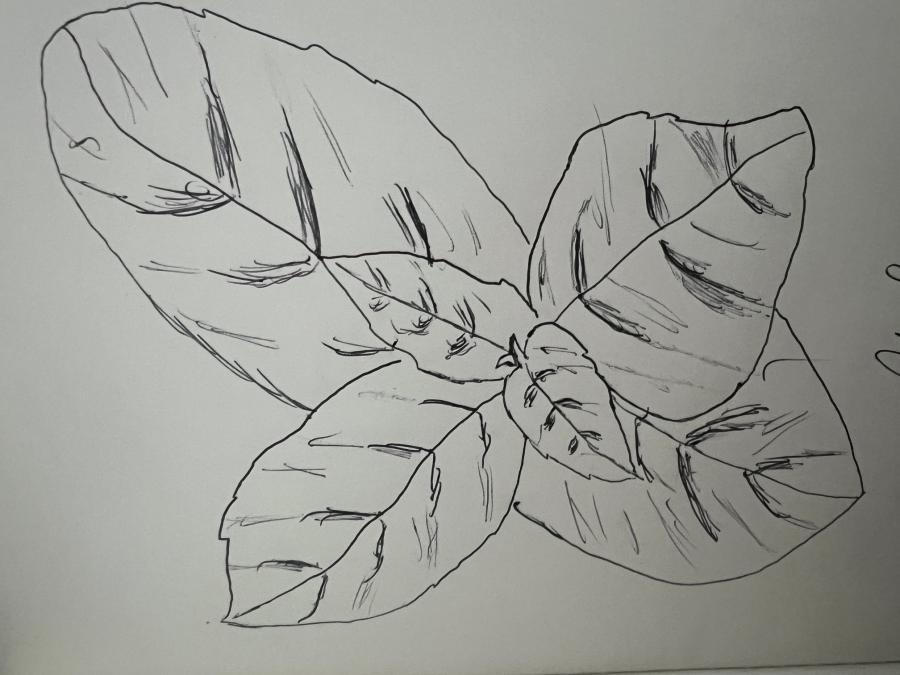
During my time there, I got to talk with many local Waco residents who stopped by asking questions about the greenhouse. I got to learn more about the volunteer who was a Freshman Biology major. And I got to also enjoy the peace that it brought me, getting to touch and work with these plants.
After finishing this job, Emily joined us, as well as two other classmates, Travis and Chayse, who were also helping that day, and we worked together to transfer a medium-sized tree from a rickety wooden barrel into an empty plastic trash can so that it could be transported outside into the sun. After fighting around the millions of ants that filtered out of the barrel, we were able to lift up the tree with the soil and place it in, and then I was given a hose to help water the tree as we moved it outside. This was the end of my volunteering there, but the lessons it taught me have stuck around ever since.
One important lesson I learned was how much a few sets of actions can link together to create something remarkable. Whether it was the Aquaphonic system, which requires catching fish, feeding fish, filtering their waste, spreading the fertile water to the beds, and sprouting beautiful, fresh plants. Or it was the process of actions to help disinfect the plants, filling up the bucket with bleach and water, dipping gloves in, inspecting leaves, tearing off infected ones, and repeating the process. Or if it was a group of people working together to move a tree from one home to another. This is the type of impact we can have on both nature and each other.
If we approach other people with this mindset of carefully constructing the actions and decisions we make, then who knows what kind of impact we can have. But it doesn’t take somebody giving you a job; sometimes it takes you going and finding those places of refugia that need your care. That needs your love.
This same chain of actions is what led to creating this remarkable pollinator garden, and from its actions, will hopefully inspire you and anyone else who reads it. By taking on the stories that we tell, you might be inspired to make your own. What chain reaction can you cause that will make a difference? What impact will you leave behind because of it? What action can you take here and now to inspire others and to build our common home into a place of harmonious beauty? I hope that by reading this, you, dear reader, walk away with a new lesson and a drive towards making those intentional actions that can inspire change in our common home.
Creative Invitation
Introduction
In relation to my reflection, there are many ways that we can act out and work towards these chains of actions. But sometimes, it can be very difficult to look for the right places to start. How can we cultivate and build up our community if we don’t even know where to look? As someone observant, I felt like I would make a piece that calls this issue to mind, to give an invitation to notice things that maybe onedoesn’t ever notice. To adjust our perspectives to the world around us.
One of the pieces of literature our class read this semester was from Ghost Fishing, a poetry anthology that talks about different forms of eco-justice. One of the poems that we read by Ross Gay was “To the Fig Tree on 9th and Christian”, where we see the story told from the perspective of a man traveling through town on his way to work, and comes across this local garden with a fig tree that many travelers will admire or pick from. But even greater than that is the sense of community that the tree brings about. People who are brought together, to enjoy its fruits and subsequently learn about one another, as people gather around it. It is a place that doesn’t just promote a beautiful life in the middle of a busy city, but is a place of transformation.
One story this poem made me think of is a children’s book that I am sure many of us know of, which is The Giving Tree by Shel Silverstein. In this, we see from a tree’s perspective, the ways in which it provides for a young boy who played around it a bunch. The humanization of a tree, that actively works to ensure a boy is loved and happy, even as it is stripped of its resources, still giving back to the very end. I think this idea that nature gives back is incredibly powerful. Sometimes we don’t recognize all that nature gives us. It provides us with beautiful and sometimes rare sights, it gives us energy and oxygen, and it gives us places of comfort that we can turn to.
Based upon these stories, I decided to come up with an adaptation of The Giving Tree, using the perspective of Fig Tree on 9th and Christian, that something like a tree that may go unnoticed, can instead promote social interactions, growth, and harmony. This piece is a mix of poetry and prose to depict the perspective of a tree. Playing off the narrative and childlike styles of the two poems. But also to give a story that gives a further meaning behind it all. Where can we find these moments of refugia as the tree in the story interacts with its environment? And additionally, discovering those chain reactions that occur in this tree’s world.
From Nature’s Eyes
From Nature’s Eyes
In wonder it sighs
Sighs, at great size
At great might, with presence wise
Rise limbs to the skies
Heavenly shade to baptize
Once upon a time, there was a tree, tall and mighty, standing as wind bristled through its limbs, leaves flicking all about as they wrestled each other. The sky above was bright and blue, streamed with streaks of fluffy clouds. A bright sun blessed it with energy and light. The critters below that came and went, climbing up its trunk, claws and paws tickling it. Rustling from the feel, as they skittered up and down and around its roots. The bushy-tailed squirrels collected the nuts that it threw down. The red furred fox, trotting exhausted from its hunt, rested in its shade. The mighty yellow-beaked eagle that cawed and perched on its limbs. The tree admired its world and its beauty, and it was happy.
From Nature’s Eyes
In wonder it sighs
Sighs, at great size
At great might, with presence wise
Rise limbs to the skies
Heavenly shade to abscise
The streaks of clouds settled in tight, condensing the blue of the skies as the tree noticed the change. Autumn was arriving, another winter was coming, but it would stay tall. Even as the critters, the squirrel, the fox, the eagle would disappear from view, it felt a sense of duty to remain strong and true. But the wind blew, blowing harder, and over time, those wrestling leaves wrestled each other to the ground. Feeling naked and bare, on display amongst its fellow trees. But even through the embarrassment, it lifted its eyes to the sky, giving no cries. It would stay true, it would stay the course. With the company it had in its fellow trees, it was enough to keep it going strong. And as such, it remained happy.
From Nature’s Eyes
In wonder it sighs
Sighs, at great size
At great fright, with presence tries
Rise limbs to the skies
Heavenly shade to pulverize
Rumbling, the trees shook, frightened by the loud rumbling that surrounded them. This noise was confusing to the tree; the winter months had produced no visitors, yet here metal and steel, grinding around their roots, heavy, big, and scary. Creatures would emerge with shimmering tools and items, as the grinding machine whirred. The tree soon felt itself grow cold, standing and watching as its friends were attacked. The machine was tearing at their bases, watching trees falling to the ground, one by one, the forest that surrounded the tree was open. The cries and creaks of the trees that fell to the ground, snow covering them as soon as the creatures chained them, dragging them away. The rumbling, the searing noise, the whine of the engines that echoed through the trees' own body, as it watched its world be torn apart. The tree couldn’t watch, but it had no choice, helplessly seeing its friends torn and dragged away. Until all that was left was it, the scary machines dragging trees away, and now all that remained was it, so it braced itself for the creatures to come back, to cut it down, but they never did. It stood lingering in anxious anticipation, but winter continued, the days grew shorter, and the tree tried its best to be happy.
From Nature’s Eyes
In wonder it sighs
Sighs, at great size
At great plight, and presence eternize
Rise alone to the skies
Heavenly shade to supplies
Days flew by, and the clouds shifted away as the sun shone down on the open landscape. The tree was alone. It had no friends, it felt abandoned, and not even those critters had ever come back to visit. Where were its friends? It didn’t know, but as the snow melted away, grass and flowers sprang up in the open land; at least some beautiful things were left for it. But something soon felt off; those creatures, the tree sensed them. Sure enough, they came back, but with different equipment, bigger machines, as they began to tear at the soil and the grass, the poor flowers ripped from their homes as the area was filled with greyish rubble of some sort. Over months of loud, restless activity, the tree watched from its grassy patch as structures were built. Wooden structures, as well as colorful pieces thrown about it, and a big field of grass where the tree stood alone amongst these new things. It was appealing to look at, but the tree questioned it all. Could it really be happy that its whole world was changed?
From Nature’s Eyes
In wonder it sighs
Sighs, at great size
A new sight, its presence to centralize
Rise above, to the skies
Heavenly shade to humanize
These creatures, he learned to be humans, began to filter about. As the bright hot summer sun scorched its branches, the leaves returned to its limbs, and from its branches soon produced apples. Shiny red apples that were full and beautiful. But despite the joyous return, the tree had to readjust to this new environment. So much noise, activity, smaller humans playing on these structures, looking so happy. It pleased the tree to see, watching these boys and girls running about, around it. It reminded the tree of its home before, but something was different. The tree might be the only one around, but in this human scape, it was unnoticed. No humans scittering up its ticklish trunks, or even looking at it. It was alone. It was not happy.
From Nature’s Eyes
In wonder it sighs
Sighs, at great size
A playground, its presence only to aphorize
Wise, truth to the skies, perhaps a surprise
Just patiently waiting for one to recognize
And so days went by, the tree remained unnoticed, yet ever present. The agony of ignorance. Its branches hung a bit lower, accepting this fate it had been given. Reflecting on its life before, the friends it had, and the beauty it existed in. Then one day, a little boy came up to it. The tree was surprised, gazing down on the little boy, who looked up at it. Brushing its bark, before lying down to sit under its shade. A sense of warmth was returning to the tree that had long been lost, even in the midst of the hot summer months. The tree stood tall and proud, glad to be noticed, and vowing to protect this sweet boy. Over the next several days, every day the boy would come. Gathering its leaves to make into crowns. Climbing up its trunk, making the tree rustle from the feel of the human's hands and feet running up and down. Then he would swing from its branches, eat the delicious apples, and play around with the tree until he exhausted himself enough to doze off under the tree’s shade. Waiting for the boy’s parents to pick him up. These days were the best days of the tree’s life, much like the past, yet now, even more special.
From Nature’s Eyes
In wonder it sighs
Sighs, at great size
A new home, its presence now to realize
Wise, as it rises once more to the skies
This new heavenly life to apprise
The actions of the little boy soon spread to other people. Families would spend more time around the tree, with other humans joining the boy in his games. The park celebrated the tree, caring for it, taking its delicious apples, and enjoying the wonderful creation surrounding them all. And by tending to this patch of nature within the park, would carry on its wonder. But despite all this, the tree always had a special place in its heart for the boy. And even as days flew by, the connection that it had with the boy remained, and the tree hoped it would never go away.
Life had changed for the tree; it brought great loss and anguish, but even from that loss came something even more rewarding. While it may never forget the tragedy it had faced, and it would never receive that wooden company again. This newfound home was still something wonderful. Giving the tree a new sense of purpose. To enjoy the new world it had, and be a tree that, for those who needed it, would know it would be there for them. The tree felt no more fear, only love. And as the tree looked over it all, looking over the world that it now called home, it admired its new world and its beauty, and it was happy, really, really happy.
Works Consulted
Gay, Ross. To the Fig Tree on 9th and Christian. American Poetry Review, 2013.