

Cultivating Refugia Through the Practice of Generosity
by Ava Whittaker for Dr. Joshua King’s ENGL 4365: Literature and Environmental Justice Class, Fall 2025
Welcome
Hello everyone! It is my profound hope that my reflection and poem encourage you to recall the pockets of refugia that you have found in your own life. I invite you to reflect on the generosity that you have experienced in the world around you and to adopt small practices of generosity in your life, so that you too can cultivate refugia.
Reflection
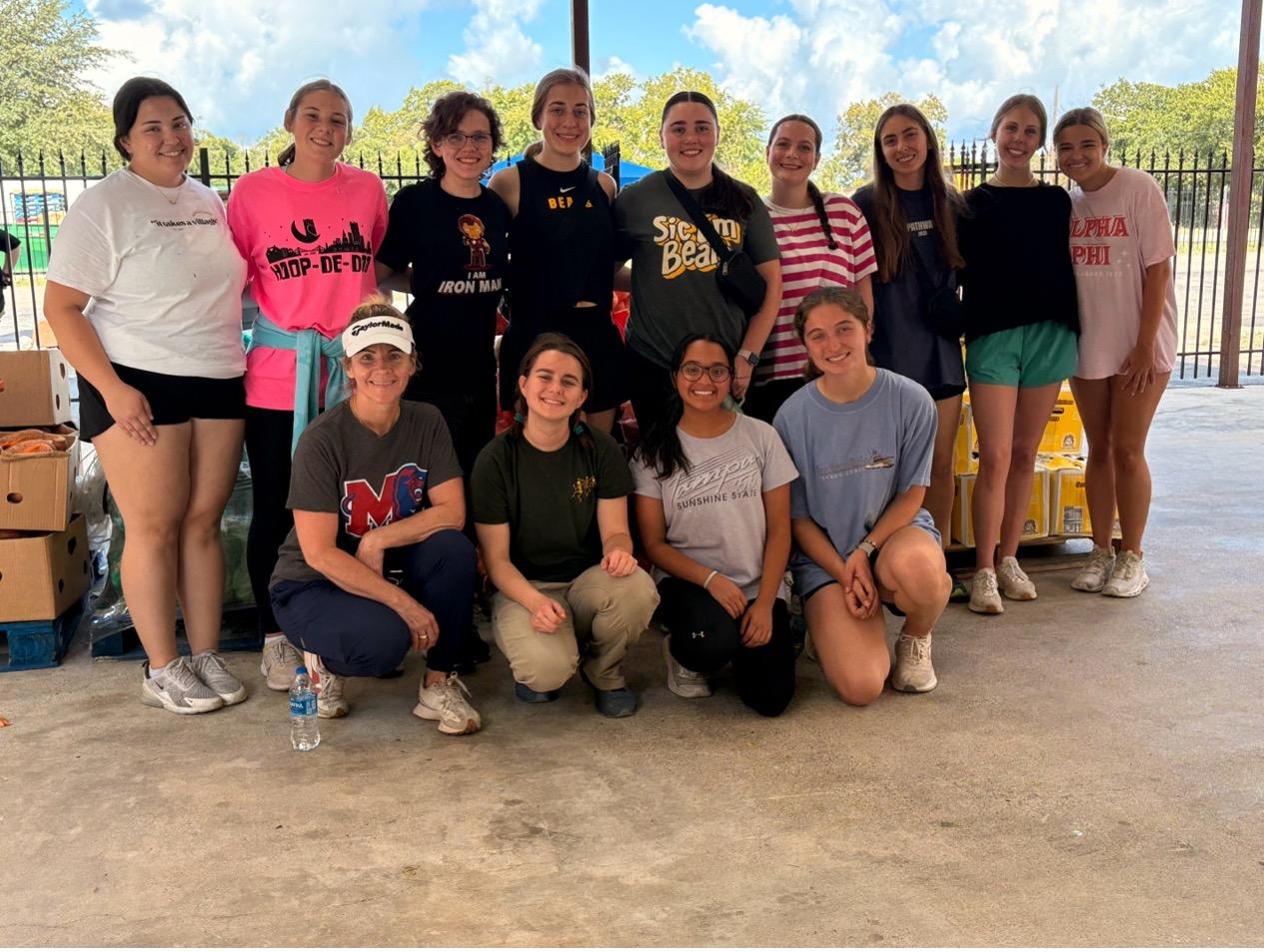
Through Dr. King’s class this semester, I had the privilege of being connected with Family of Faith Worship Center. One Saturday in October, I had the opportunity of volunteering with Family of Faith, passing out fresh produce to visiting members of the community. As we set up, piling fresh fruits and vegetables in preparation for the event, we were instructed to give people as much as they asked for. There were no limits or quantities, just abundance. There was a remarkable sense of unadulterated generosity and selflessness that I identified in everyone at Family of Faith. This was not only present in the work or in the food itself but in the way that the volunteers greeted visitors by name and checked in on them with genuine care. The warm smiles and open arms that they offered created an atmosphere that felt less like a volunteer event, and more like a gathering of family, or friends. Refugia refers to small, sheltered pockets where life can continue to grow and flourish even in impossibly harsh conditions, and I began to see that concept applied here. I came to understand how valuable Family of Faith is as a space of refugia in the community, with regular visitors and volunteers coming together to nuture and connect with one another in ways that helped their community to flourish.
Before arriving, I expected the experience to be similar to other volunteering experiences I had participated in the past. Characterized by polite smiles and brief hellos. What I didn’t anticipate was the wealth of warm and healing interactions that would make the experience so personal. By some random fortune, I ended up near the cabbages and onions and partway through the afternoon, a woman approached me excitedly, and I began loading the items into her cart. She immediately started to tell me about me about a soup she planned to make with the onions, cabbage, and other items she had picked up. She told me it was her son’s favorite and that cooking for her family was something of a love language for her, a quiet thoughtful act of nurturing to show her care. There was a familiarity in the way that she spoke that reminded me so much of my own family and home. As we continued talking, I shared how similar her stories felt to my own and how much I missed having my family close by to nurture me in those instinctive and comforting ways. We spoke for awhile, and she told me about many of the recipes that she enjoys preparing for her family. As we traded stories and experiences, I realized that she had offered me something so much greater in that small conversation than any food that I might have placed in her cart that day. I had arrived at Family of Faith expecting to serve others, but I left understanding that I had also been given something so meaningful.
The more I have reflected on the time I spent at Family of Faith, the more I have come to realize the way that refugia is deeply rooted in the natural world. The food distributed by Family of Faith offers something far bigger than basic physical nourishment. Family of Faith Worship Center is a beautiful testament to the ways that the natural world invites us to create spaces of refugia. Refugia isn’t necessarily a physical location, it’s a practice. When we practice refugia, approaching one another with selflessness and generosity, we can foster a healing and nurturing connection. The refugia of Family of Faith wasn’t the place, it was the choice to come together in community and to approach one another with abundance and generosity. The space itself was secondary to the community and spirit that allowed it to flourish. Through the small act of handing out vegetables, I witnessed how the gifts of the natural world can do so much more than sustain our bodies, they can become a bridge between people, offering shared connection, healing, and refuge.
Ultimately, Family of Faith transformed my perspective of refugia. What once had seemed like some abstract concept that we can only hope to find once in a blue moon became a beautiful reflection of the ordinary everyday practices of kindness and stewardship. Refugia is not rare or unattainable, it grows in life the same way it can grow in the natural world, whenever and wherever we choose to cultivate it. It brought me hope that if we begin to choose generosity and to approach one another with the stewardship that we should also show to the earth, that we can open up spaces of refugia in places and communities everywhere. In this way, Family of Faith taught me that creating refugia, is something that we can all take part in, one small action at a time.
Creative Invitation
Introduction
Through my creative invitation, I hope to highlight the subtle forms of generosity offered by the natural world. Throughout my experience in this course, I have become keenly aware of the way that refugia is cultivated through generosity and it is my hope that reflecting on the generosity we have experienced, however big or small, can inspire us to create new spaces of refugia. I was especially influenced by the poems of Kathy Jetñil-Kijiner and Ross Gay. In her poem Basket, Kathy Jetñil-Kijiner personifies the earth as a nurturing feminine presence, which helped shape the earth’s character in my poem, underscoring this theme of generosity. Similarly, I was inspired by Ross Gay’s poem Patience to identify those small quiet acts of beauty that are often taken for granted or go unnoticed. Through these influences, I aimed to create a poem that invites readers to reflect on the abundant gifts of the natural world and to consider practices that they can adopt to mirror that same abundant selflessness.
Creative Invitation
And isn’t it something
How the earth offers herself to us
In the peaceful rustling of the leaves
She gives us shelter.
On her outstretched limbs
She gives us nourishment.
She seeks no payment, she gives and gives
She gives herself in endless encouragement.
And isn’t it special
How the earth offers us renewal.
In her bright spring blooms
She makes hope visible.
In her fresh morning dew
She cleans the day’s slate like new.
Even in the places we once thought barren,
She gives and gives
She gives us life anew.
And isn’t it tender
How the earth offers us comfort
In her soft green grasses
She gives us space to rest.
In her cool streams
She gives us cleansing, seeing us made new
She gives and gives
She gives us comfort to continue pushing through.
And isn’t it profound
How earth shows us the way.
In her selflessness,
In her renewal,
In her generosity,
She gives and gives
So much, that one must stop and think
What could we achieve
Should we start to give and be more like she?
Works Consulted
Gay, Ross. “Patience.” Catalog of Unabashed Gratitude, University of Pittsburgh Press, 2015, pp. 15–16. JSTOR,https://doi.org/10.2307/j.ctt1287p67.7.
Jetñil-Kijiner, Kathy. “BASKET.” Iep Jaltok: Poems from a Marshallese Daughter, University of Arizona Press, 2017, pp. 4–5. JSTOR, http://www.jstor.org/stable/j.ctt1ht4v9d.3.