

My First Step to Becoming Eco-Friendly
By Madison Pham for Dr. Joshua King’s ENGL 4365 Literature and Environmental Justice class, Fall 2025
Welcome
Through the simple act of composting, I have further deepened my appreciation for the environment while also expanding my knowledge about disparities that are present in our campus and communities. Learning about the importance of how impactful composting is can be life changing for the individual while it can also make a lasting impact on the environment too. Learning how to compost and how composting actually works has not only changed my perspective on sustainability, but also the trajectory of my life. Therefore, I hope you can take away an idea that feels out of reach and turn it into a daily habit.
Reflection
Ever since I was little, my whole world was based on the outdoors. I spent weekends with my family at the beach and my afternoons on the park trail next to my home with my friends. During those family weekends, we fished, ate lunch, swam, and looked for small creatures that called the little tide pools their home. During my evening playdates with my friends, we built homes for any wandering creatures that may have needed to seek shelter for the night, using materials we would find around us. As we scavenged the outdoors for pieces of nature that would make the perfect couch for the tiny living room, we also picked up trash. Nature was my second home, and my daily routine was centered around it. As time slipped past me, I spent less and less time outdoors and more time inside, ignoring the diminishing nature on the other side of my front door. One day it truly hit me when I realized how much I cared for nature. The outdoors that had once always cared for me, was struggling through the lens of my now adult eyes and I knew I had to make my own impact.
I only knew the basics on how to be eco-friendly, such as using reusable water bottles and bringing my own metal straws. But I never knew much more than that until I took Dr. King’s Literature and Environmental Justice class. There, I learned what it truly meant to understand and practice the meaning of environmental justice. We were assigned to collect food scraps and drop them off in a compost bin three times in the semester and before doing this, I always thought, “I want to help, but I don’t know how.” Scraps that I once tossed in the trash can instead be returned to the soil, where they then help produce new fruits and vegetables. Too ripe bananas that can be repurposed into banana bread also became part of my routine. Instead of throwing away bananas that became too mushy, I would either turn them into banana bread ortoss them into my composting bin. Through this process, I began to see how small, intentional actions can have a meaningful impact on the environment. Composting made me more aware of how much food I was wasting and further encouraged me to be more thoughtful about what I consumed and discarded. It also helped me understand environmental justice on a more personal level, showing me that sustainability is not just an abstract concept, but something that can practiced in everyday routine. By making these changes, I felt more empowered and connected to the idea that caring for the environment starts with small and simple choices that contribute to a healthier and more sustainable future.
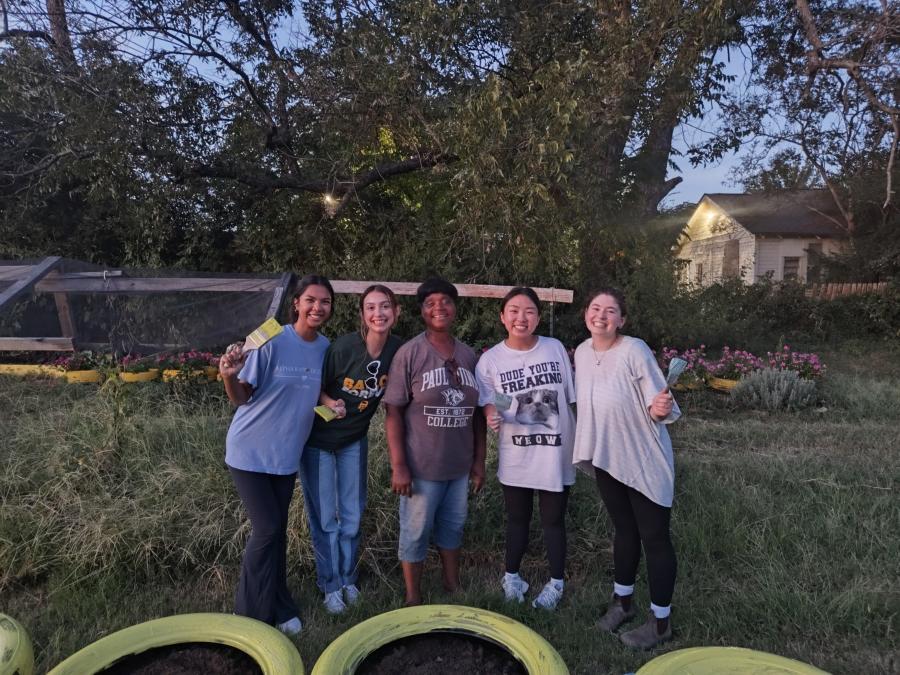
During my time at Global Revive, we were tasked to transfer nutrient-rich soil from the composting area, and into large pots for plants. The composting area smelled deep and earthy, and I found myself smiling as I imagined how well the plants would thrive in this enriched soil. In that moment, composting made me feel like it was something I should have been doing all along, like a full-circle process. I thought about how someone’s discarded food scraps, once sitting in a compost bin, were now being transformed into nourishment for new life. It was truly moving to see waste become a resource and to recognize how interconnected our simple actions are, like how something one person throws away can ultimately help feed someone else. This experience and journey made environmental sustainability feel tangible and rewarding for me, further reinforcing the idea that even small contributions can lead to meaningful growth.
I still remember how ordinary composting felt when I first started. At the time I did not think much about the deeper meaning behind the act or how it connected to larger issues beyond my own daily routine. But as the semester went on, those small actions began to stay with me. Watching food scraps break down and turn into nutrient-rich soil and learning where that soil would eventually go made me pause and reflect on how waste, when seen differently, can become something valuable. At the same time, learning how environmental justice and the environmental disparities faced by many communities deeply changed the way I understood these practices. I began to see composting not just as a sustainable habit, but as a response to systems that often place environmental harm on those with the least resources. That realization motivated me to keep composting even outside of the three required drop offs. It became a quiet but meaningful way for me to stay connected to what I learned, further reminding me that real change often starts with awareness and small and consistent actions that reflect care for both the environment and the people most affected by it.
Creative Invitation
Introduction
Through my time in this class, my daily routine and perspective on life have shifted in ways I did not expect but deeply value. I have learned that meaningful change does not always begin with grand gestures butsometimes, all it takes is a small nudge in the right direction. Those gentle nudges can grow into habits, quiet, intentional choices, that reshape how we treat the world we all share and call home. I want this poem to serve as that nudge, a reminder that even small, gentler habits can create a dramatic impact.
For a long time, I struggled to understand how my individual actions could matter in the fight against climate change. My efforts felt insignificant compared to the scale of the problem, and that sense of powerlessness often led to inaction. However, after drawing inspiration from “To the Fig Tree on 9th and Christian” by Ross Gay, I began to see things differently. The poem opened my eyes to the idea that change begins in the ordinary, within our daily routines, our awareness, and our willingness to care. Just simple, repeated actions can ripple outward, creating a chain reaction far greater than we initially imagine.
I hope this poem invites you to pause and look more closely at the habits that change and shape your everyday life. Within those routine lies the nudge towards hope. If we allow ourselves to believe that small actions matter, we can begin to create meaningful change together and with intention.
That Trying Feeling
The sky looked pixelated
When I walked out at noon,
Like someone turned the resolution down
To save a little room.
Recycling bin overflowing
With old receipts and half-good tries,
And the neighbor’s blowing bubbles
Like he’s warding off the end of time.
Saw a headline today:
“Everything is Fine.”
Scrolled past it for a dog video
Cause my brain was getting tired.
So, I bought a cactus at a market
Cause they said it’s hard to kill,
Now it’s thriving on my windowsill
Like it’s got some secret will.
It’s that trying feeling,
Watching summers come in hot,
Hearing “once in a century”
Way more than we ought.
Now I’m walking past the coastline
That used to stretch a little more,
Maybe we can fix it,
Knowing what I need to stand up for.
Maybe it’s all just practice
Turning the lights off more often,
Or maybe taking longer walks to notice
Every leaf we haven’t lost yet.
Sammi said, “Do you ever worry
We’re the ones who lit the spark?”
I said, “Yes, but look
There’s still green in the city park.”
It’s that trying feeling
Healing what we didn’t mean to take,
Choosing smaller, gentler habits
For the planet’s sake.
Now I’m standing in the doorway
With new seeds in my hands,
Might not be enough for me to save it
But maybe it’s my stand.
It’s that trying feeling--- And that’ll be our plan.
Works Consulted
Ross Gay, “To the Fig Tree on 9th and Christian” (2013). (2024). In Penn State University Press eBooks (pp. 316–320). https://doi.org/10.1515/9780271098265-053